











Postpartum Depression: The Silent Struggle Every Mother Deserves to Talk About
- by ["Dr. Priyanka Mehta"]
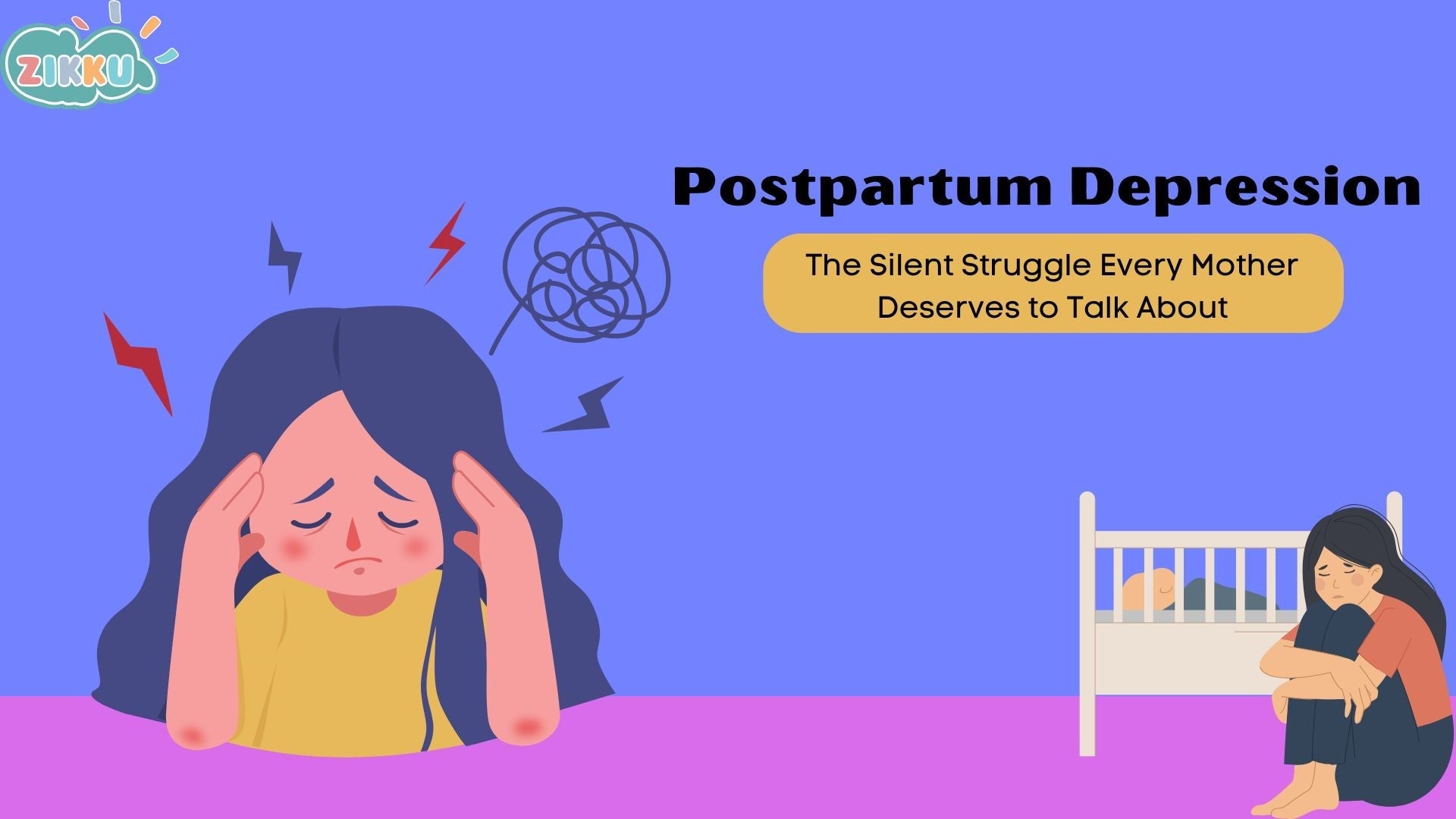
It was the third night in a row that Ritu found herself sitting on the bathroom floor at 3 a.m., baby asleep in the next room, tears rolling down without any particular reason. Her son was healthy. Her husband was kind. Her mother-in-law had come to help. On paper, everything was fine. So why did she feel like she was drowning? Why did she flinch every time someone said, "Enjoy this time, it goes so fast"? Why did holding her own baby sometimes feel like holding a stranger? Ritu didn't tell anyone for weeks. She thought something was wrong with her as a mother, not with her mind. She thought she was ungrateful. Weak. Broken. She wasn't any of those things. She was living through postpartum depression, something almost 1 in 5 Indian mothers experience, and something almost nobody prepares you for. If any part of Ritu's story sounds familiar, take a breath. You're not a bad mother. You're not alone. And this is one of the most important things you'll ever read about your own wellbeing.
What Is Postpartum Depression, Really?
Postpartum depression (PPD) is a genuine medical condition that affects a mother's mood, thoughts, and energy after childbirth. It isn't sadness that you can simply "snap out of," and it isn't something that happens because you don't love your baby enough. Here's the simplest way to understand it: after delivery, your hormones, sleep, identity, body, and daily life all change at once, almost overnight. For most women, the brain and body adjust within a couple of weeks. For some, that adjustment gets stuck, and the low mood, anxiety, or numbness doesn't lift. That's postpartum depression.
Why it happens
It happens because of a mix of hormonal shifts, physical exhaustion, sleep deprivation, and the sheer emotional weight of becoming responsible for a completely dependent human being. It can happen to first-time mothers and mothers who've done this before. It can happen after an easy delivery or a difficult one. It doesn't check whether you wanted this baby, planned this baby, or love this baby more than anything in the world.
Why it is NOT weakness
Nobody chooses to feel disconnected from their own child. Nobody chooses to cry without knowing why, or to feel panic over something as small as a diaper change. PPD is not a character flaw. It's a medical condition, the same way thyroid problems or anaemia are medical conditions that show up after pregnancy. You wouldn't call a mother "weak" for developing gestational diabetes. The same logic applies here.
Why it isn't "bad parenting"
This one needs to be said clearly: a mother struggling with PPD is often doing everything right — feeding the baby, keeping them safe, showing up every single day — while fighting a private battle no one can see. Struggling with your mental health after birth has nothing to do with how much you love your child or how capable you are as a parent.
Why Nobody Talks About It
If PPD is this common, why does it feel like such a secret?
- Guilt: Mothers are told, over and over, that this is supposed to be the happiest time of their lives. When it doesn't feel that way, guilt creeps in before anything else. "What kind of mother feels like this?" is often the first thought, long before "something might actually be wrong."
- Social pressure: There's an unspoken rule that new mothers should glow, gush, and gratefully accept every bit of advice thrown their way, without complaint.
- "A mother should be happy": This one sentence, repeated in a hundred different ways by well-meaning relatives, is often the biggest reason women hide what they're feeling instead of asking for help.
- Indian family expectations: In many Indian households, the postpartum period comes with a lot of hands-on help, but also a lot of unspoken pressure — to be endlessly grateful, to not "worry" elders, to prioritise the baby's needs above your own so completely that your own emotional state becomes invisible, even to yourself. Talking about feeling low, anxious, or overwhelmed can feel like admitting failure in front of an entire family watching closely.
The result? Millions of mothers suffer quietly, convinced they're the only ones who feel this way.
Baby Blues vs Postpartum Depression: What's the Difference?
This is one of the most searched, and most confusing, questions new mothers have. Here's a simple comparison to help you tell them apart.
|
Feature |
Baby Blues |
Postpartum Depression |
|
When it starts |
2–3 days after delivery |
Anytime within the first year, most often 2–6 weeks after delivery |
|
How long it lasts |
Usually resolves within 2 weeks on its own |
Lasts weeks to months if untreated |
|
Intensity |
Mild mood swings, weepiness |
Deep, persistent sadness, hopelessness, or numbness |
|
Daily functioning |
Mostly unaffected |
Often affects sleep, appetite, bonding, and daily tasks |
|
Need for treatment |
No medical treatment usually needed |
Often needs counselling, support, or medical care |
|
Underlying cause |
Sudden hormone drop after birth, which settles on its own as the body adjusts |
Sudden hormone drop after birth, made worse by factors like poor sleep, lack of support, a difficult delivery, or a personal/family history of depression |
If your low mood is fading on its own within two weeks and you're still able to function, it's likely the baby blues. If it's getting worse, lasting longer, or affecting how you care for yourself or your baby, it's time to take it more seriously.
Symptoms of Postpartum Depression
PPD doesn't always look like constant crying. It can be quiet, confusing, and easy to dismiss. Here's how it can show up.
Emotional symptoms
- Persistent sadness, emptiness, or hopelessness
- Feeling disconnected from your baby
- Excessive guilt or feeling like a "failure" as a mother
- Irritability or anger that feels out of character
- Loss of interest in things you used to enjoy
Physical symptoms
- Constant fatigue that doesn't improve with rest
- Changes in appetite — eating far more or far less than usual
- Trouble sleeping, even when the baby is asleep
- Unexplained aches, headaches, or stomach issues
Behavioural symptoms
- Withdrawing from family and friends
- Avoiding the baby or, at times, being overly anxious around them
- Crying spells with no clear trigger
- Difficulty completing everyday tasks
Thinking (cognitive) symptoms
- Trouble concentrating or making decisions
- Racing, intrusive, or frightening thoughts
- Constant worry that something bad will happen to the baby
- In severe cases, thoughts of self-harm or harming the baby
If you notice several of these lasting more than two weeks, please don't wait it out. Speak to a doctor.
Why Does Postpartum Depression Happen?
Forget the medical jargon for a second. Here's what's actually going on in your body.
During pregnancy, your hormone levels, especially oestrogen and progesterone, are at an all-time high. The moment your baby is born, these hormones drop dramatically within 24 to 48 hours. Imagine a rollercoaster that's been climbing for nine months suddenly plunging in a day. That crash alone can shake anyone's mood.
On top of that, your body is healing from delivery, your sleep is broken into two-hour chunks (if you're lucky), your identity is shifting overnight from "yourself" to "someone's mother," and you're doing all of this while running on very little rest and, often, very little help with your own emotional needs. Add thyroid changes, which are common after delivery and can independently trigger depression-like symptoms, and it's easy to see why so many mothers struggle, not because something is wrong with them, but because their body and mind are handling an enormous amount all at once.
Who Is More Likely to Develop PPD?
While PPD can affect any new mother, certain factors increase the risk:
- A personal or family history of depression or anxiety
- A difficult pregnancy, delivery, or complications (including emergency C-sections)
- Lack of support from family or partner
- Sleep deprivation and exhaustion
- Financial stress or relationship difficulties
- A history of pregnancy loss or fertility struggles
- Thyroid imbalances after delivery
- An unplanned or unexpected pregnancy
- Being a first-time mother, or having a baby with health complications
Having one or more of these risk factors doesn't guarantee you'll experience PPD, and having none doesn't guarantee you won't. It's simply information that helps you and your family stay alert.
How Does Postpartum Depression Affect the Baby?
This is a question many mothers are afraid to even search, out of fear of what they'll find. Here's the honest, reassuring answer: PPD affects the baby mainly through the caregiving environment, not through some permanent, irreversible harm.
When a mother is struggling, bonding, responsiveness, and daily routines can be affected, which may influence a baby's sleep, feeding, and early emotional development. The encouraging part is that this is very much reversible. Once a mother receives support and treatment, bonding and daily rhythms typically improve, and babies are remarkably resilient. Seeking help isn't just good for you, it's one of the most protective things you can do for your baby too.
When Should You Seek Help?
Please reach out to a doctor if you notice any of these warning signs:
- Sadness, anxiety, or emptiness lasting more than two weeks
- Difficulty bonding with your baby
- Withdrawing from loved ones
- Intense fear of being alone with the baby
- Thoughts of harming yourself or your baby (seek help immediately if this occurs)
- Feeling like you're "failing" no matter what you do
- Panic attacks or constant, uncontrollable worry
There is no "too small" reason to ask for help. If something feels wrong, that's reason enough.
How Doctors Diagnose Postpartum Depression
Diagnosis is usually straightforward and non-invasive. Your doctor will typically:
- Ask about your mood, sleep, appetite, and daily functioning over the past two weeks
- Use a simple, validated questionnaire such as the Edinburgh Postnatal Depression Scale (EPDS)
- Rule out thyroid issues or anaemia through basic blood tests, since these can mimic or worsen depressive symptoms
- Discuss your personal and family mental health history
There's no invasive procedure to fear here, just an honest conversation, which is often the hardest and most important first step.
Treatment for Postpartum Depression
Postpartum depression is very treatable, and most mothers recover fully with the right support.
- Counselling and therapy: Talking to a trained therapist, particularly through approaches like cognitive behavioural therapy, helps many mothers process their emotions and regain a sense of control.
- Medication: For moderate to severe PPD, doctors may prescribe antidepressants that are safe during breastfeeding. This decision is always made with your doctor, based on your specific situation.
- Support groups: Connecting with other mothers going through the same thing can be incredibly validating. Sometimes just hearing "me too" from another mother changes everything.
- Lifestyle support: Adequate rest (even in short bursts), nutritious food, gentle movement, and practical help with household or baby duties all support recovery. A well-nourished body genuinely supports a steadier mind.
Recovery isn't a straight line, and it isn't a solo project. It usually takes a combination of these, along with patience and consistency.
Things Family Members Should Never Say to a New Mother
If someone in your life is struggling, please avoid these phrases, no matter how well-intentioned they might feel:
- "You're overreacting.", Instead say: "I believe you. Tell me what you're feeling."
- "Other mothers manage.", Instead say: "Every mother's journey is different, and it's okay to find this hard."
- "Just think positive.", Instead say: "You don't have to pretend to be okay around me."
- "You have everything, what's there to be sad about?", Instead say: "Having support doesn't mean you can't also be struggling. I'm here."
- "Don't tell anyone, log kya kahenge.", Instead say: "This stays between us if you want, but please don't stay silent about it."
Sometimes the most powerful thing a family member can do is simply sit beside a struggling mother without trying to fix her, just listen.
Things You Can Do Today
Small steps matter more than perfect ones.
- Tell one person how you're really feeling, even if it's just one sentence
- Sleep whenever the baby sleeps, without guilt
- Step outside for five minutes of fresh air
- Drink enough water and eat something nourishing, even if it's simple
- Ask for one specific piece of help today (not "help me," but "can you hold the baby for 20 minutes while I shower")
- Write down how you feel, even messily, even without sharing it
- Reach out to your doctor and simply say, "I don't feel like myself"
You don't need to fix everything today. You just need to take one small step.
Myths vs Facts About Postpartum Depression
- Myth: Only weak mothers get postpartum depression.
- Fact: PPD can affect any mother, regardless of strength, personality, or how much she wanted her baby. It's a medical condition, not a personality trait.
- Myth: It'll go away if you ignore it.
- Fact: Untreated PPD often lasts longer and can deepen over time. Support and treatment speed up recovery significantly.
- Myth: PPD only happens right after delivery.
- Fact: It can begin anytime within the first year after childbirth, not just the first few weeks.
- Myth: If you didn't feel it after your first baby, you won't feel it after your second.
- Fact: PPD can occur after any pregnancy, even if previous ones were symptom-free.
- Myth: Medication for PPD means you can't breastfeed.
- Fact: Many antidepressants are considered safe during breastfeeding. Your doctor can guide you to the right option.
- Myth: Talking about it will worry your family unnecessarily.
- Fact: Speaking up early usually brings relief and support, not worry, to those who love you.
Postpartum depression doesn't mean you're failing. It means your body and mind went through something enormous, and they need a little extra support to catch up. Asking for help isn't giving up on motherhood, it's one of the strongest, most loving things you can do for yourself and your baby. You are allowed to not be okay right now. You are also allowed to get better. Talk to your doctor, tell someone you trust, and be as gentle with yourself as you would be with your own child.
Every mother's postpartum journey is different, and at Zikku, we walk this path alongside you — as moms and caregivers ourselves. Explore our range of postpartum and newborn care essentials, designed to make recovery a little softer and a little easier.
If you or someone you know is struggling emotionally after childbirth, please don't wait it out alone. Speak to a gynaecologist, physician, or mental health professional — early support makes recovery faster and easier.
You're doing better than you think, mama.