






Is It Normal to Feel Pain While Breastfeeding? Causes, Relief & When to Seek Help
- by ["Dr. Priyanka Mehta"]
"Just push through it, it gets better." If you've heard this from a well-meaning relative or read it in a hundred parenting forums, here's something that might surprise you: it's only half true. Some soreness in the early days does go away on its own. But pain that makes you dread every feed, that doesn't ease up, or that leaves your nipples cracked and raw — that isn't something to "push through." It's something to understand and treat.
This confusion is exactly why so many mothers stop breastfeeding earlier than they wanted to. It's also one of the top reasons mothers give for stopping breastfeeding sooner than planned. Not because they didn't try hard enough — but because nobody helped them tell the difference between pain that's a normal part of adjusting, and pain that's a sign something specific needs fixing.
So let's make that difference clear, without the vague reassurances most articles give. Some soreness in the first few days can happen, but pain that lasts or gets worse is not something to ignore. This guide goes a step further than most — instead of just listing causes, it helps you figure out which one you might actually be dealing with, based on how the pain feels, when it happens, and what it looks like.
Is Pain During Breastfeeding Normal?
Mild soreness in the first three to five days after birth is common. Your nipples are getting used to something completely new, and both you and your baby are still learning. This kind of soreness is usually mild, shows up mainly right when the baby latches on, and eases within the same feed.
What's not typical:
- Pain sharp enough that you brace yourself before every feed
- Pain that continues through the whole feed, not just the start
- Pain that's getting worse in week two or three, instead of better
Studies that followed new mothers found that while nipple pain is very common in the early weeks, it does get better for most women — though it took about 18 days on average in one study, with a lot of variation from person to person. So if you're only a few days in, some soreness is expected. If you're a few weeks in and still hurting badly, that's your cue to find out why — not to wait longer.
Common Causes of Breastfeeding Pain — and How to Tell Them Apart
1. Baby Not Latching Deep Enough (By Far the Most Common Cause)
When your baby's mouth closes around just the nipple, instead of taking in a good mouthful of the breast around it, the nipple gets squeezed and pulled with every suck. This is the number one cause of nipple pain in almost every study on the subject.
How to recognise it:
- The pain is sharpest in the first few seconds of latching, then often eases as the feed goes on
- After the feed, your nipple may look flattened or pointed at the tip, a bit like the tip of a fresh lipstick, instead of round
- You might hear clicking or smacking sounds while your baby feeds
Why this happens: When the latch is deep, your nipple sits further back in your baby's mouth, cushioned by breast tissue, so it isn't being squeezed directly. When the latch is shallow, the nipple takes the full force of the sucking by itself.
2. Cracked, Bleeding, or Blistered Nipples
This is usually a result of a shallow latch that hasn't been fixed over several feeds — not a separate problem on its own. Once the skin breaks, everyday friction from feeding (and even from clothing) keeps irritating it, which is why the pain often gets worse instead of better on its own.
How to recognise it: You can see cracks, a raw or shiny patch, or small blisters, usually at the tip or base of the nipple. The pain also continues well after the feed is over, not just during it.
3. Engorgement (Overfull Breasts)
When your milk supply increases sharply, usually between day 2 and day 5, your breasts can become tight, warm, and swollen. This changes their shape enough that even a baby with a normally good latch may struggle to attach properly — which is how overfull breasts and latch pain often end up making each other worse.
How to recognise it: Both breasts feel unusually firm, heavy, and warm (not just one side), the skin may look tight or shiny, and the pain usually eases noticeably right after a feed or after expressing a little milk.
4. Nipple Vasospasm (Sudden Tightening of Blood Vessels)
This cause doesn't get talked about enough, even though studies suggest it affects somewhere between 1 in 8 and 1 in 4 mothers who have ongoing nipple pain. It happens when the tiny blood vessels in the nipple suddenly tighten, cutting off blood flow for a short time — often triggered by cold air right after a feed, or by nipple skin that's already sore from a shallow latch.
How to recognise it: A burning or stinging pain that shows up after the feed, not during it. Your nipple may visibly turn white, then blue or dark red, before slowly returning to its normal colour as the pain fades. Cold rooms or stepping out of a warm shower can bring it on.
5. Tongue-Tie in Baby
Sometimes the real cause isn't your latch technique at all — it's that your baby's tongue can't move freely enough to draw in a good amount of breast tissue, no matter how you position them. This is called tongue-tie, and it's a restriction in the small piece of skin under the tongue.
How to recognise it: The pain continues no matter what position you try or how many times you re-latch; feeds tend to take a long time; your baby may struggle to stay latched or slip off often; weight gain may be slower than expected.
6. Thrush (a Yeast Infection) — and Why It Gets Blamed Too Often
Many a times thrush gets blamed for breastfeeding pain. Several studies now suggest thrush is over-diagnosed as a cause of ongoing nipple pain — many cases that were called "thrush" in the past turned out, on closer look, to actually be vasospasm, a mild infection, or leftover damage from a shallow latch.
How to recognise real thrush: A burning pain in both nipples that doesn't match the latch pattern above, sometimes with shiny or flaky-looking nipple skin, usually alongside white patches inside your baby's mouth (cheeks or tongue). Because it's so often mistaken for something else, it's worth getting it properly checked before starting any antifungal treatment.
7. Mastitis (Breast Infection)
Mastitis affects roughly 1 in 5 breastfeeding mothers at some point, and more than half of all cases happen within the first four weeks after birth. So it's very much an early concern, not something rare that only happens later.
How to recognise it: A wedge-shaped patch of redness and warmth on one breast, a firm or lumpy area that hurts to touch, and — the key detail that sets it apart from ordinary soreness — flu-like symptoms such as fever, chills, and body ache. This needs medical attention quickly.
8. Blocked Milk Duct or Milk Bleb (An Often-Missed Cause)
This one rarely shows up, but it's a real and recognised cause of ongoing pain in one exact spot: a small hardened plug can form at the opening of a milk duct on the nipple, sometimes visible as a tiny white or yellow dot (often called a "milk bleb").
How to recognise it: Sharp, pinpoint pain at one specific spot on the nipple, often worse when your milk lets down, with a visible small dot or blister right at that spot — and sometimes a firm, tender area just behind it.
Tips to Reduce Breastfeeding Pain
- Aim for a deep latch by waiting for your baby's mouth to open wide before bringing them close to the breast.
- Change feeding positions through the day so the same spot on the nipple isn't squeezed every time
- Feed a little earlier, before your baby is extremely hungry or your breasts are overly full
- Let nipples air-dry after each feed instead of staying damp under a bra
- Keep the nipple area warm and covered right after feeds if you notice the burning, colour-change pain of vasospasm
- Wear a soft, breathable nursing bra that doesn't press or squeeze
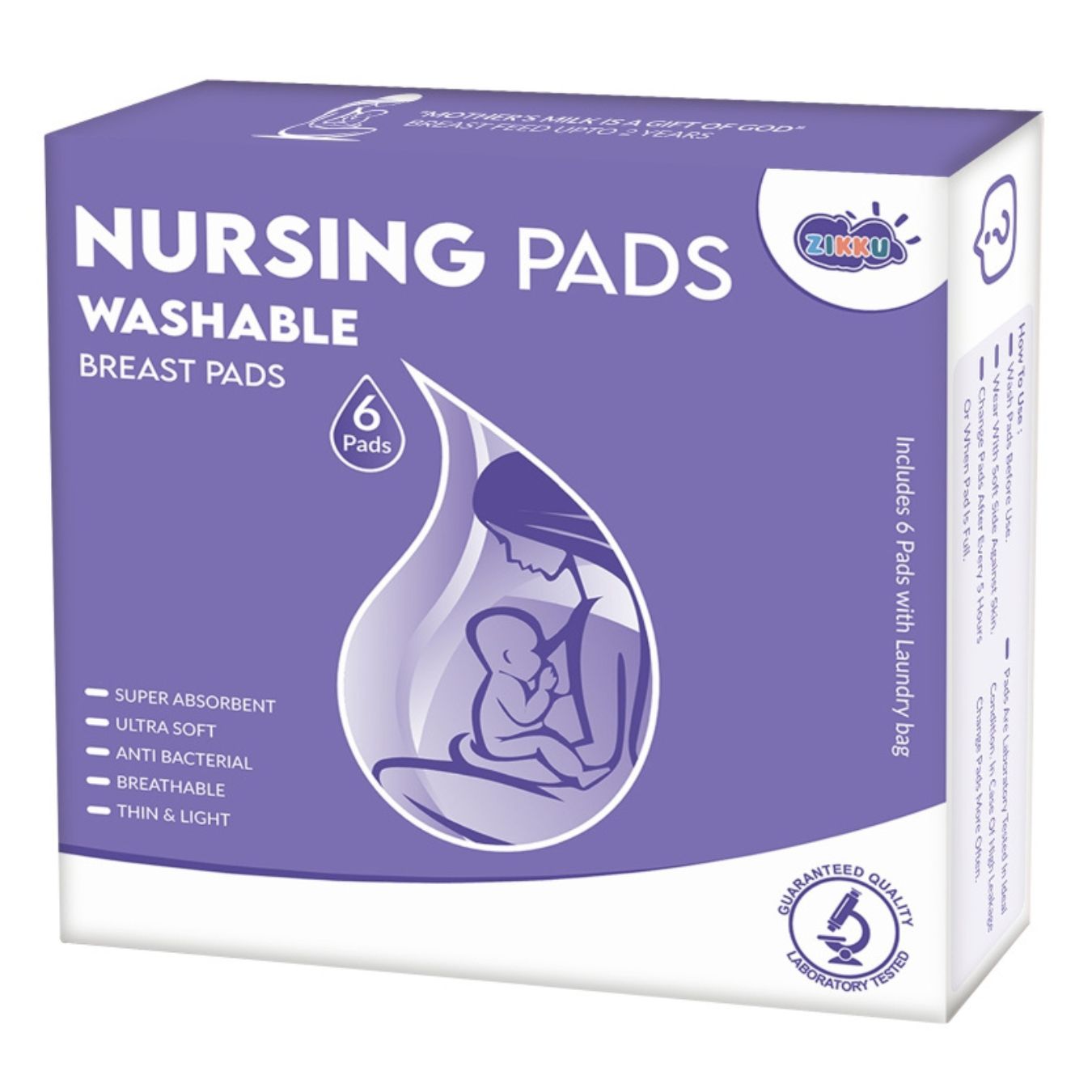
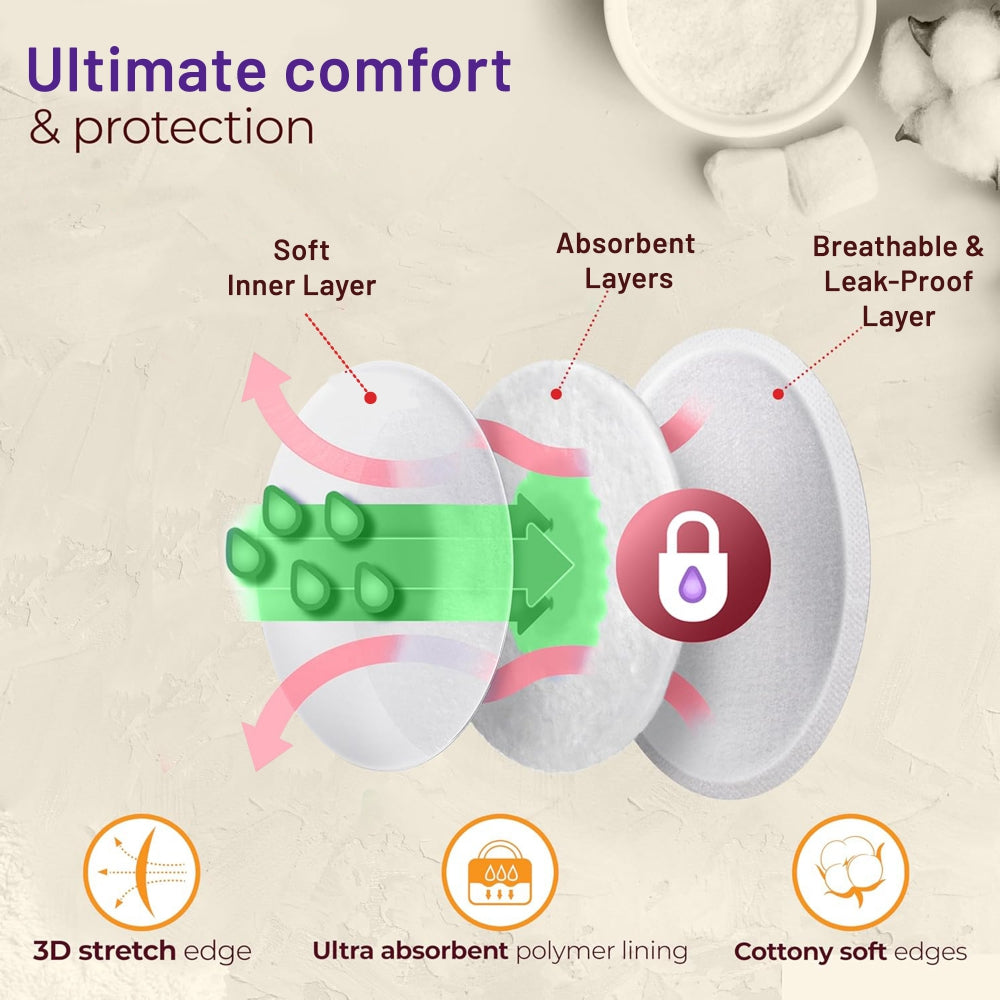
- Use nursing pads to soak up leaks and keep skin dry between feeds
- Drink enough water and eat regular, balanced meals — healing skin needs the support
If the pain continues even after trying these, the next step is getting your baby's latch checked by a lactation consultant, not simply waiting longer.
When Should You See a Doctor?
Reach out promptly if you notice:
- Pain that continues past two to three weeks without getting better
- Visible cracks, bleeding, or blisters that aren't healing
- Fever, chills, or body ache
- One breast turning red, hot, and firm in one area
- Your baby gaining weight slowly or having ongoing trouble feeding
- Pain that doesn't match any of the patterns above, or simply feels wrong
Getting checked early almost always means faster relief — and a much better chance of continuing to breastfeed comfortably for as long as you want to.
Common Myths About Breastfeeding Pain
- Myth1: Breastfeeding is supposed to hurt in the beginning, full stop.
- Fact1: A little soreness right when your baby latches can be normal early on. Pain that lasts through the whole feed, or continues for weeks, has a specific cause almost every time.
- Myth2: If breastfeeding hurts, you should just stop.
- Fact2: Most of the causes above can be treated once you know what they are — often within days of the right fix. Stopping usually isn't the fastest path to comfort; finding the actual cause is.
- Myth3: Nipple pain means your milk supply is low.
- Fact3: These two are usually unrelated. Pain is about the skin or the latch, not about how much milk you're making.
- Myth4: If it's not the latch, it's probably thrush.
- Fact4: Thrush is guessed far more often than it's actually confirmed. Vasospasm, blocked ducts, and leftover latch damage are frequently mistaken for it — which is exactly why matching your specific symptoms matters more than guessing.
Final Thoughts
Taking care of yourself matters just as much as taking care of your baby. When a mother feels supported, breastfeeding becomes easier—for both of you.
Remember, breastfeeding is a journey, not a test of endurance. Every mother and every baby learn at their own pace. If you're facing pain or challenges, don't suffer in silence or assume it's something you simply have to live with. In most cases, the right guidance, timely support, and small adjustments can make a remarkable difference. Most importantly, be kind to yourself. You're learning, healing, and nurturing a new life—all at the same time. That's no small feat.
At ZIKKU, we believe that informed mothers make confident mothers. We hope this guide has answered some of your questions, eased your worries, and reminded you that you are not alone in this journey.
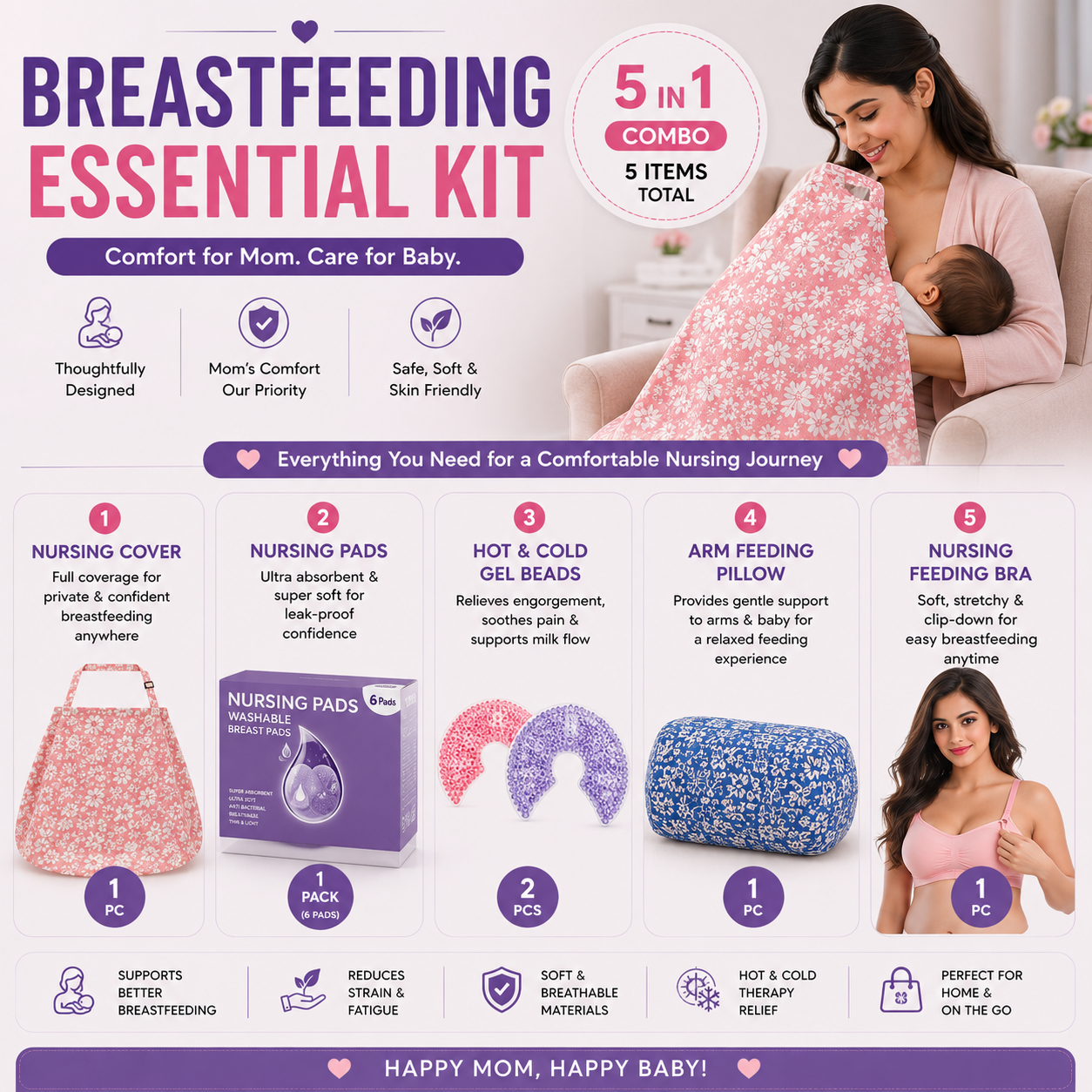
Helpful Breastfeeding Essentials for New Moms
A few everyday essentials that many mothers find make feeding more comfortable, alongside the right care and guidance above:
- Reusable nursing pads — help soak up leaks and keep the area dry between feeds
- Nursing bra — soft support without pressing on sensitive skin
- Nursing pillow or arm feeding pillow — for better positioning during long feeds
- Nursing cover — for comfortable feeding on the go
- Hot & cold gel beads — for soothing warmth before a feed or cooling relief after
You can browse the full range in our maternity feeding essentials collection. For more guidance on pregnancy, newborn care, and parenting, explore our Pregnancy, Newborn & Baby, and Parenting blogs on Zikku.in.