

Wooden vs Plastic Baby Walkers: The Truth Parents Need to Know
- by ["Dr. Priyanka Mehta"]

So you're expecting your first baby or already have a little one at home, and you're scrolling through endless options for baby walkers. The choices feel overwhelming, right? One moment you're looking at brightly colored plastic walkers with flashing lights, and the next you're wondering if that traditional wooden push walker your grandmother used is actually a better option. Let me walk you through this decision—because it matters more than you might think.
Understanding Baby Walkers: What They Actually Do
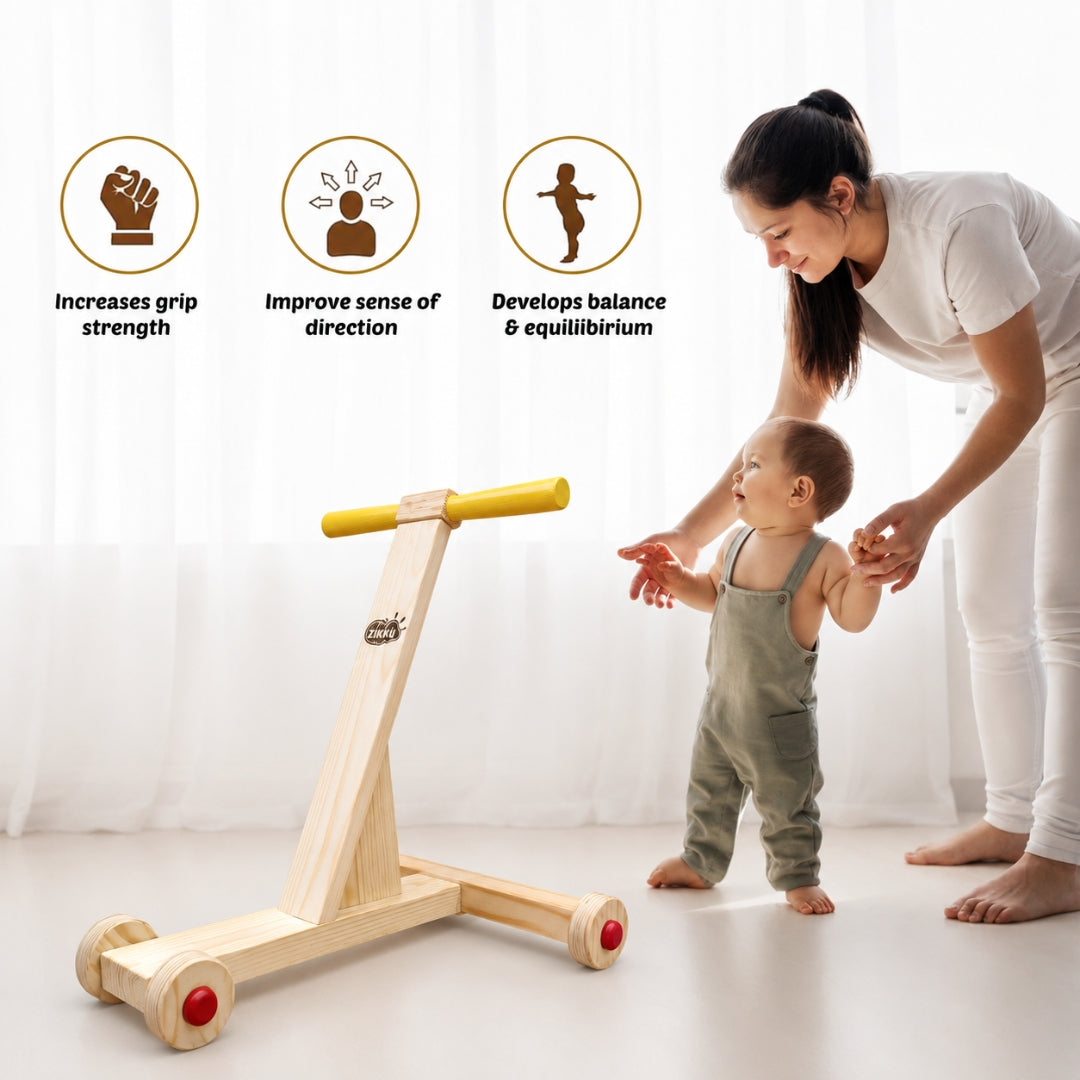
Before we dive into the "wooden versus plastic" debate, let's understand what a baby walker actually does. A push walker is a mobility aid that helps babies transition from crawling to walking independently. It's not just a toy; it's a developmental tool that supports your child's natural progression toward independent walking.
When your baby grabs onto a walker and starts moving forward, they're strengthening their leg muscles, improving balance, and building confidence. However, not all walkers are created equal, and the material you choose can significantly impact your child's development and safety.
The Safety Factor: Why Material Matters
Plastic Walkers: Understanding the Concerns
Plastic baby walkers have dominated the market for decades because they're affordable and come packed with features. But here's what research and experienced parents will tell you: cheaper doesn't always mean better.
Plastic walkers often contain synthetic materials that can off-gas (a gas which is given off) volatile organic compounds (VOCs). When your baby spends time gripping and potentially chewing on these walkers, they're exposed to chemical residues. Studies have shown that plastics used in baby products can leach harmful substances, particularly when exposed to heat or when the material begins to wear down.
Additionally, plastic walkers are often lightweight and can tip over easily, creating a hazard for your toddler. They're also prone to breaking, creating sharp edges that can injure curious little hands.
Wooden Walkers: Nature's Design
Wooden push walkers, on the other hand, are naturally safer in multiple ways. Solid wood doesn't off-gas harmful VOCs. When you choose a traditional wooden walker, especially one crafted from sustainably sourced hardwood, you're choosing a material that's been safely used with babies for generations. No synthetic chemicals, no questionable coatings—just natural wood.
Wood is naturally sturdy. A well-crafted wooden walker has a lower center of gravity and broader base, making it significantly more stable than most plastic alternatives. This means less tipping and better support for your baby as they learn to walk.
Quality wooden walkers are sanded smooth with properly finished joints. There are no brittle parts that can break and create hazards. This longevity means your wooden walker can be passed down to siblings or friends—something you simply can't do with a plastic walker that's breaking apart.
The Developmental Perspective: What Child Experts Say
Developmental pediatricians increasingly recommend wooden walkers because of how they engage a child's motor skills. The weight and resistance of a wooden walker naturally encourages proper posture and weight distribution. Your baby has to engage their core muscles more actively, which actually accelerates the development of walking skills.
Plastic walkers, particularly those with wheels that roll too easily, can actually hinder proper walking development. When there's too little resistance, babies learn to lean on the walker rather than using it as a balance aid. This creates dependency and can delay independent walking skills.
With a wooden push walker, your child learns to push with intention, developing strength and confidence simultaneously. It's not about rushing milestones—it's about developing them correctly.
The Sustainability Story: Your Choice Matters
Here's something that often gets overlooked in the baby product discussion: what happens after your child outgrows their walker?
Plastic walkers end up in landfills. Every single year, millions of plastic baby products are discarded because they're broken, worn out, or simply out of favor. They take 400+ years to decompose, and they fragment into microplastics that harm our environment and eventually find their way back into our water and soil.
A wooden walker? It doesn't end there. A quality wooden walker becomes a cherished hand-me-down. It can be used by your next child, passed to your niece or nephew, or even refinished and repurposed. Some families have wooden toys and walkers that have been in their homes for three or four generations.
At Zikku, we believe that making sustainable choices for our children is one of the most direct ways we can make a difference for our planet. Every step toward sustainability is a step toward building a healthier Earth for the next generation. When you choose a wooden push walker, you're not just making the best choice for your baby—you're making a responsible choice for the world they'll inherit.
What Makes a Quality Wooden Walker?
Not all wooden walkers are the same. Here's what to look for when choosing one:
- Material Quality: Opt for walkers made from sustainably sourced hardwoods like beech or oak. These woods are naturally strong and can withstand the wear and tear of an active toddler.
- Smooth Finishing: Run your hand over the wood. It should feel silky smooth with no splinters. Check the joints where pieces connect—they should be secure and smooth.
- Stability: A good wooden walker should have a broad, stable base with smooth-rolling wheels. The height should be adjustable or appropriate for babies between 9-15 months.
- Non-toxic Finishes: If the wood is painted or sealed, ensure it uses child-safe, non-toxic finishes that have been tested and certified.
- Design: Look for simple, classic designs. Wooden walkers don't need flashing lights and plastic attachments. Simplicity is part of their charm and safety.
The Investment Perspective
Yes, a quality wooden walker costs more upfront than a plastic one. But when you calculate the cost per child, especially when you factor in durability and the ability to pass it on, the math becomes clear. You're not making a purchase; you're making an investment in your child's development and your family's sustainability.
Introducing Zikku's Traditional Wooden Push Walker
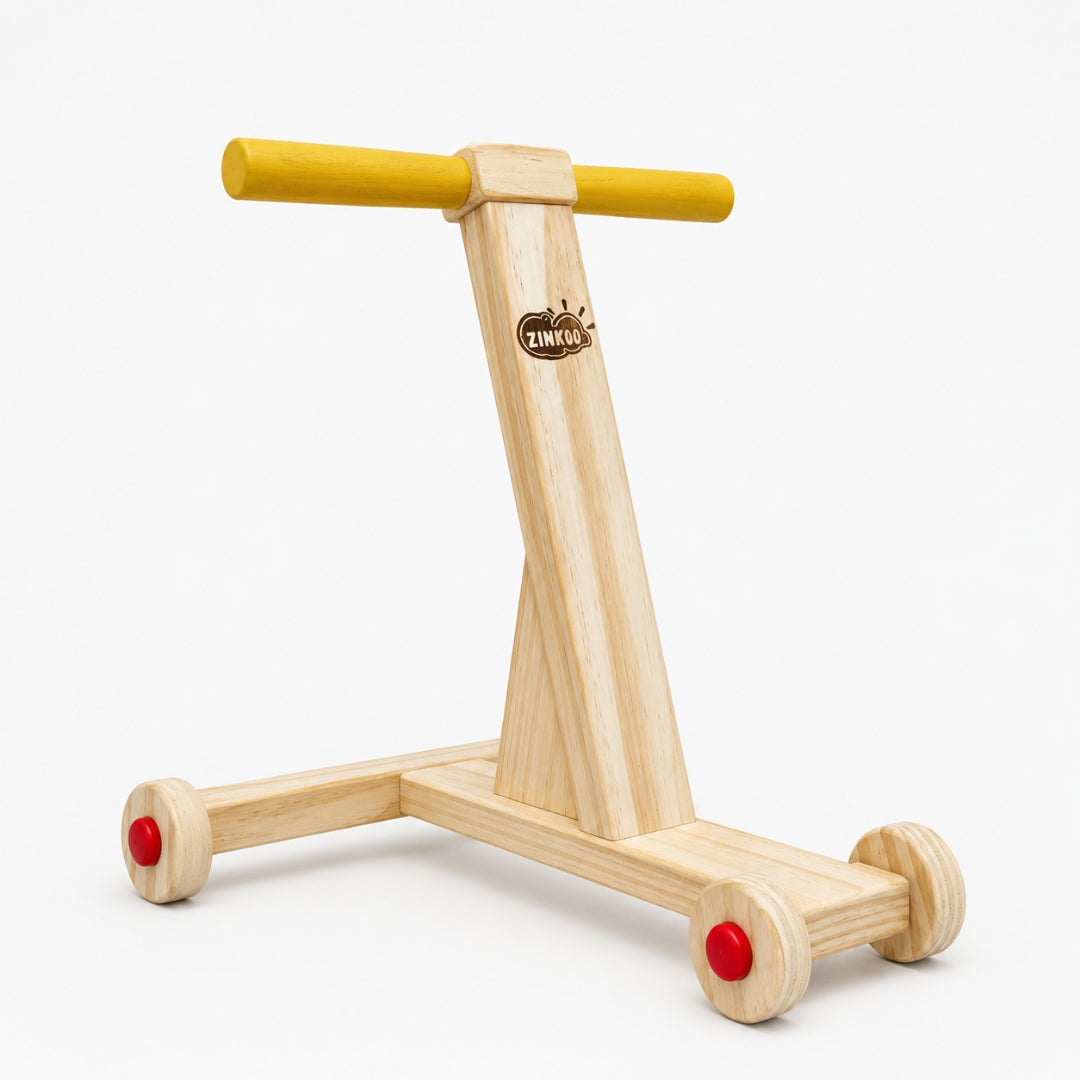
If you're convinced that a wooden walker is the right choice for your family, Zikku offers a beautifully crafted traditional handmade wooden baby push walker that embodies all the principles we've discussed.
Zikku's wooden push walker is created with attention to safety, stability, and sustainability. It's designed with the developmental needs of babies in mind, featuring a stable base that grows with your child and smooth, child-safe finishes.
Making Your Decision
Choosing a baby walker isn't just about picking a product off a shelf. It's about making a conscious decision about what you want for your child's development, your family's health, and our planet's future.
A wooden push walker represents everything that's worth preserving from traditional parenting wisdom. It's safe, it supports proper development, it lasts for generations, and it embodies the values of sustainability that more and more parents are embracing.
The plastic vs. wooden walker choice is really about this: Do you want something that lasts one child's tenure with the walker, or do you want something that becomes part of your family legacy? We believe the answer is clear. Choose the wisdom of generations. Choose wood. Choose sustainability. Choose what's best for your child and our shared planet.
Final Thoughts
Parenting is filled with countless decisions, and each one matters. The good news? Some decisions are easier than others when you understand the facts. A wooden push walker isn't just a throwback to the old days—it's the smart, safe, and sustainable choice for modern families who care about their children and their world.
Your baby's first steps are precious. Make sure they're supported by something that's been proven safe through generations and crafted with your child's development in mind.
Ready to make the switch? Explore Zikku's traditional handmade wooden baby push walker and join thousands of parents who are choosing sustainable, safe options for their little ones. Because at Zikku, we believe that the best choices for our children are often the ones that are best for our planet too.
One step toward sustainability is one step toward a healthier future. Let's walk that path together.